
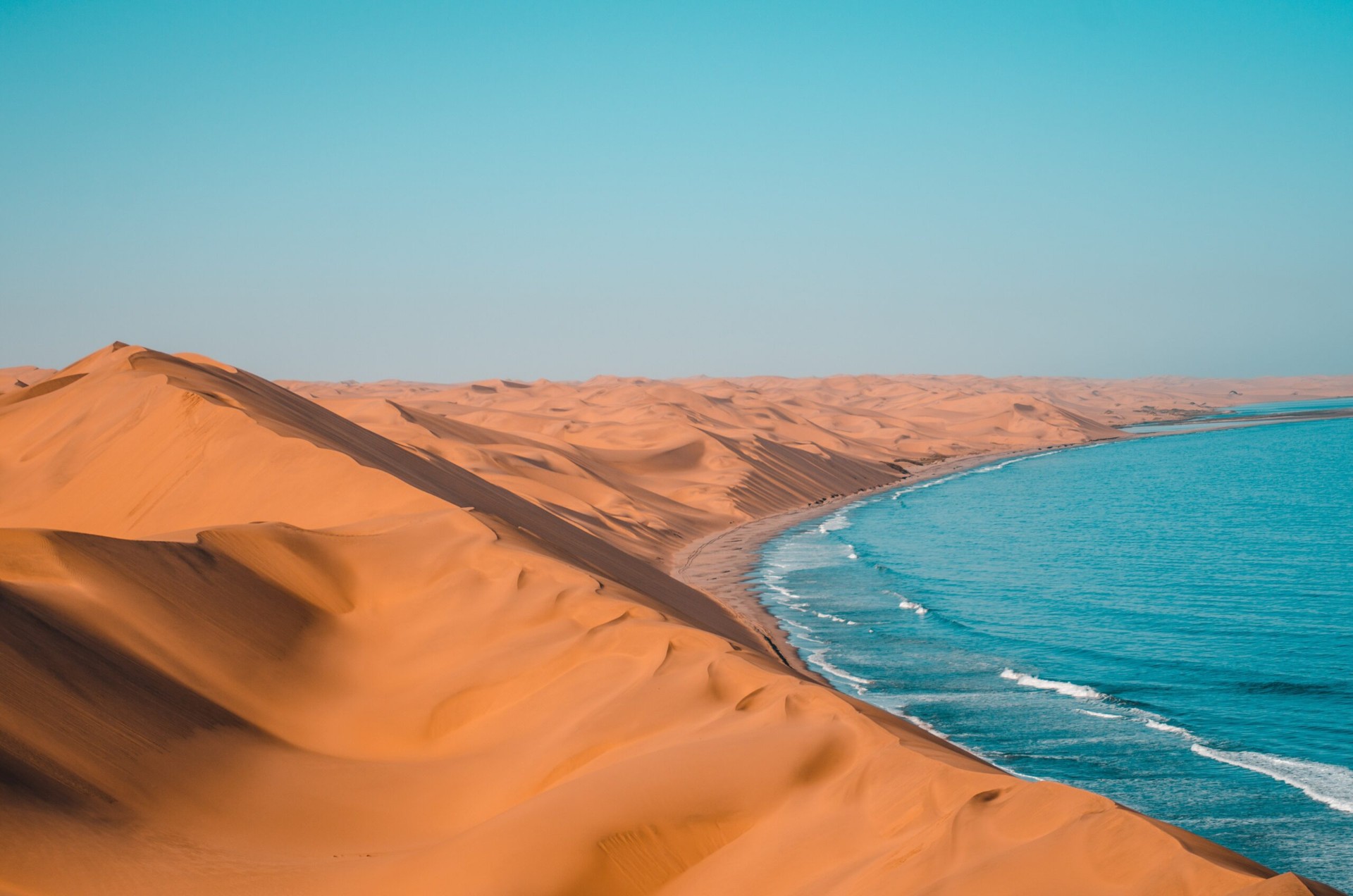
Namibia is unlike anywhere else on earth.
The world's oldest desert. Dunes the colour of fire. Elephants that have learned to survive without rivers. A coastline so remote it was named the Skeleton Coast. I've taken families here who thought they were coming for the scenery, and left changed by far more than that.
The destination that surprises every family.
Families often come to Namibia primarily for the landscape: the red dunes of Sossusvlei, the vast salt pans of Etosha, the surreal moonscape of Damaraland. The landscape is extraordinary. But what surprises almost every family I send here is the wildlife. Desert-adapted elephants, black rhino, lion hunting oryx across open gravel plains. Namibia has some of the most remarkable animal adaptations on the planet, and the space to encounter them without another vehicle in sight.
The self-drive dimension is what makes Namibia unique. It is the best self-drive destination in Africa: good tar roads connecting the major regions, very low traffic, well-organised accommodation, and a sense of raw, unmediated wilderness that guided tours in other countries simply can't replicate. Driving yourself through Damaraland with children in the back, spotting your own desert elephant, is a different experience entirely.
I'd recommend Namibia for families with children aged 8 and above. Younger children can find the long drives between regions tiring, and the landscape, though extraordinary, rewards patience and a degree of context. For the right age group, though, Namibia consistently produces some of the most adventurous and memorable family trips I plan.
Namibia's key regions.
Namibia is vast, nearly twice the size of California. Here's how I think about it, and which regions I build into family itineraries.
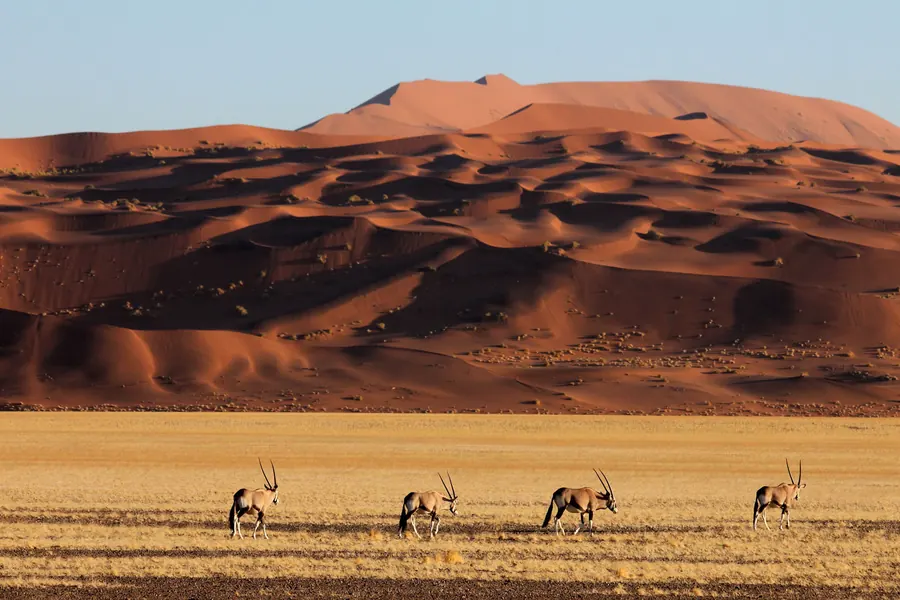
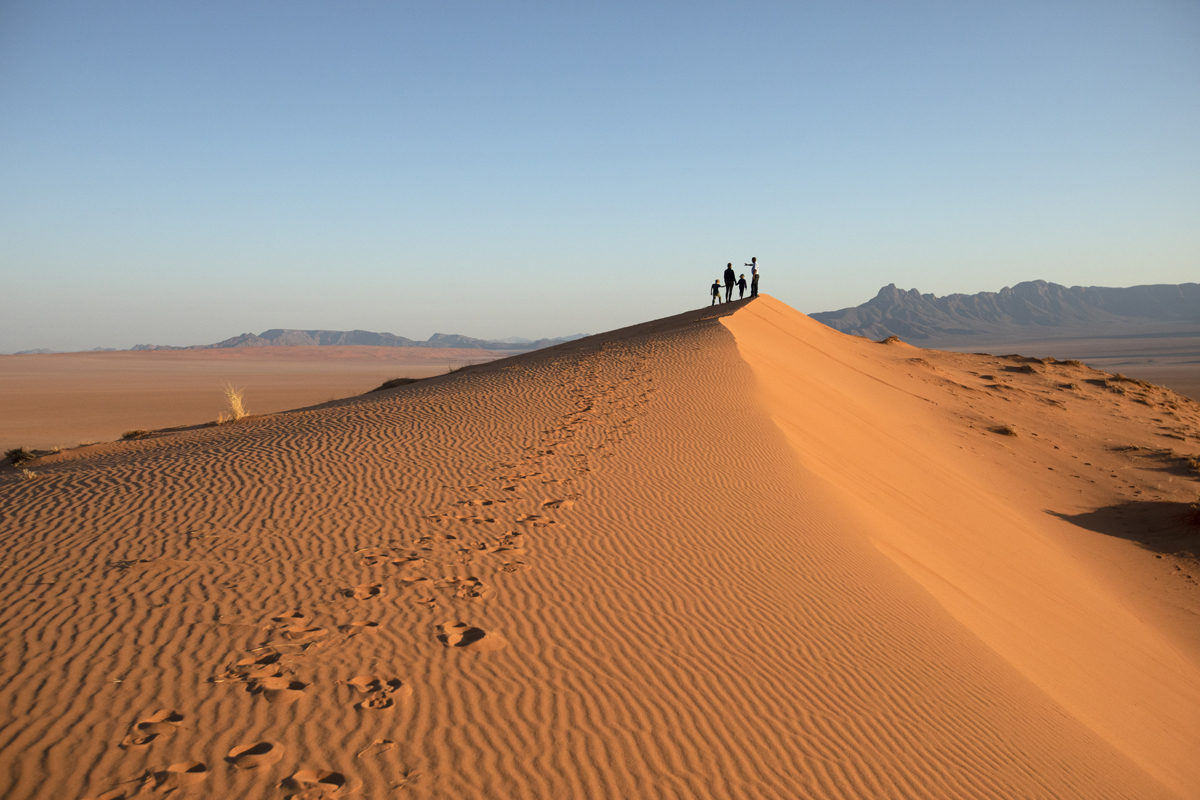
The heart of Namibia: towering red sand dunes, bleached white clay pans, and dead camel thorn trees that have stood for centuries. Dune 45 at sunrise is one of the most photographed scenes in Africa, and climbing it with children is a real adventure. Deadvlei looks like a painting and photographs like one too. I usually build a minimum of two nights here into a Namibia itinerary.
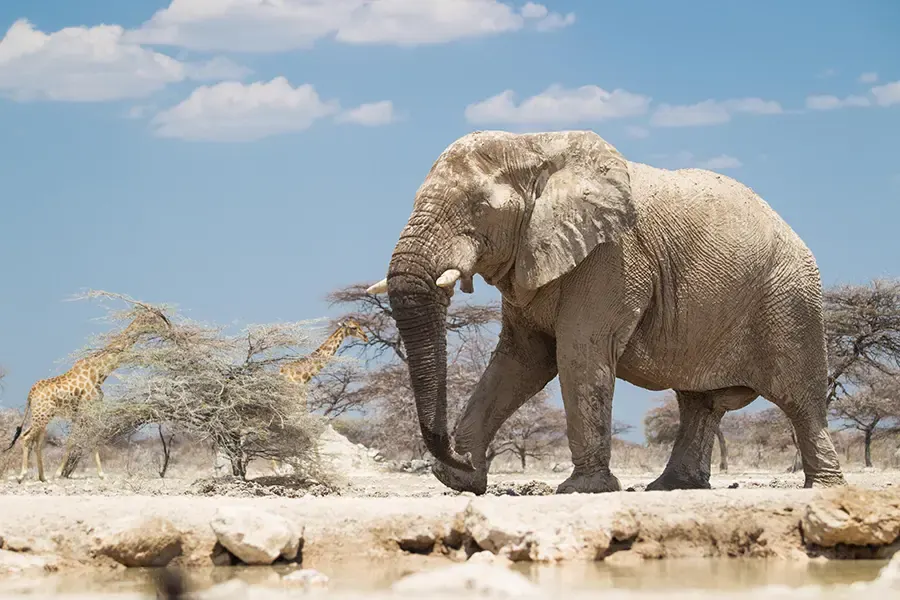
One of Africa's great national parks: a vast salt pan ringed by waterholes that attract extraordinary concentrations of wildlife during the dry season. Lion, cheetah, elephant, black rhino, giraffe and the rare black-faced impala all call Etosha home. The waterhole experience is what Etosha is all about: sitting at a floodlit waterhole at night and watching the animals arrive to drink.
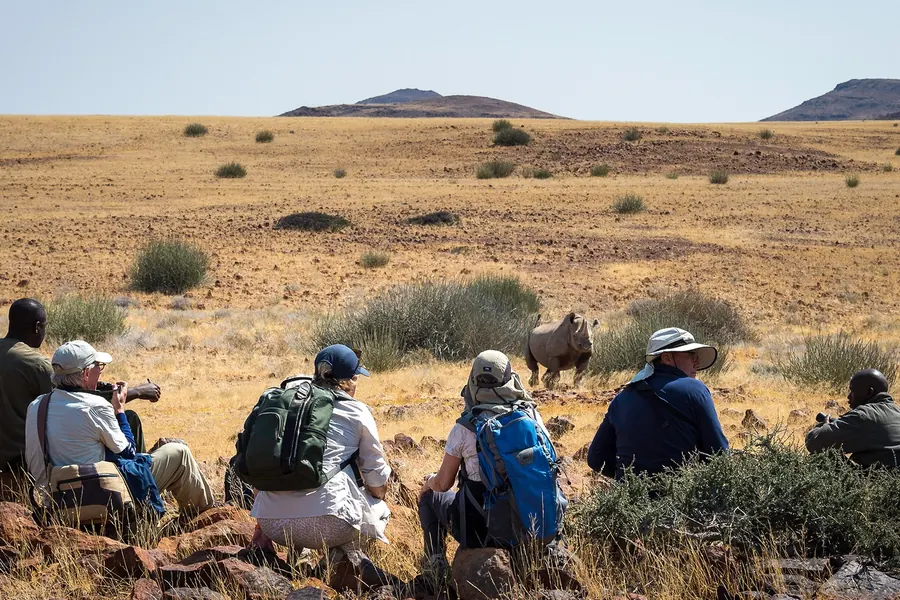
One of Namibia's most extraordinary and undervisited regions: a vast moonscape of volcanic mountains, dry riverbeds, and ancient engravings that predate most known civilisations. Damaraland is home to the famous desert-adapted elephants, who survive without permanent water by memory-mapping seasonal rivers across generations. Tracking them on foot with a guide is humbling in a way a conventional game drive rarely is.
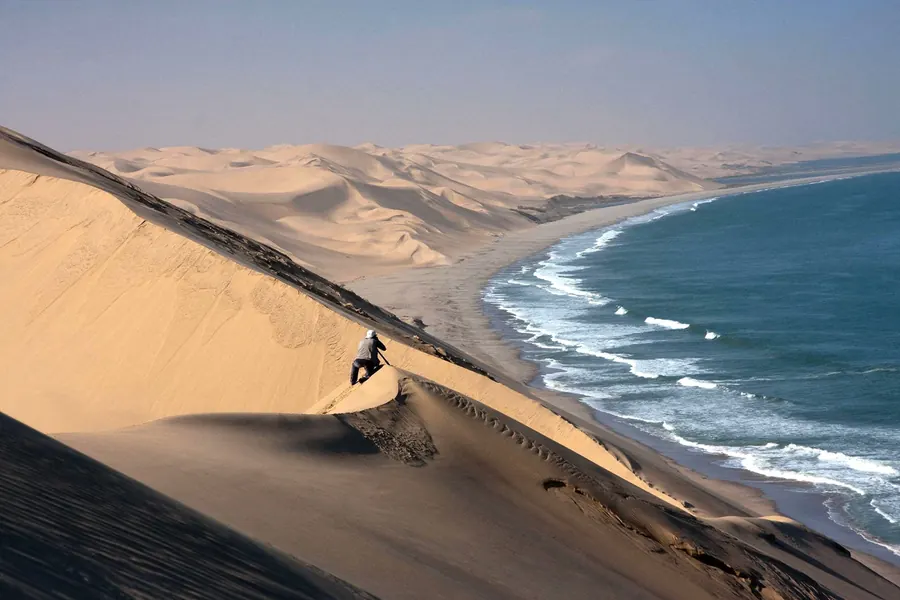
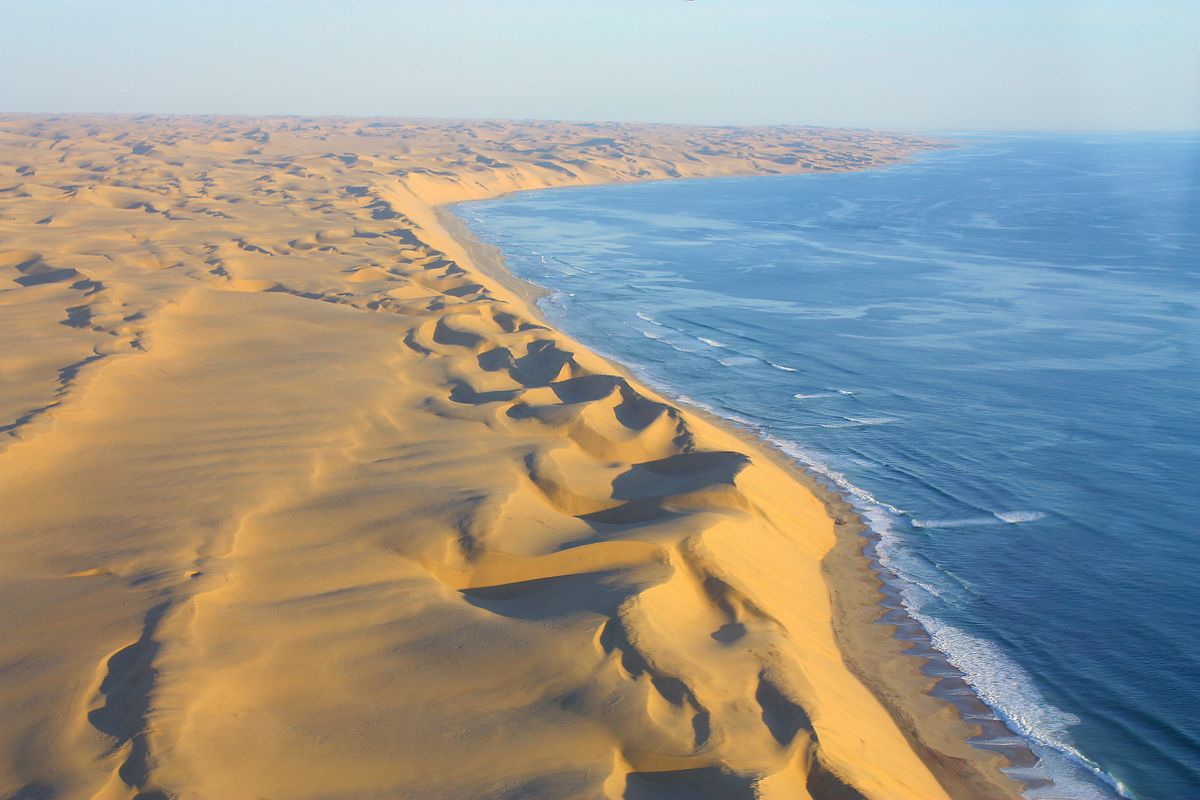
A fog-shrouded coastline where the Namib Desert meets the cold South Atlantic, littered with the rusting hulks of shipwrecks and whale bones. The far north is accessible only by fly-in and is one of the world's last true wilderness areas. More accessible is Swakopmund, a charming colonial beach town offering sandboarding, quad biking and kayaking with Cape fur seals. Children absolutely love it.
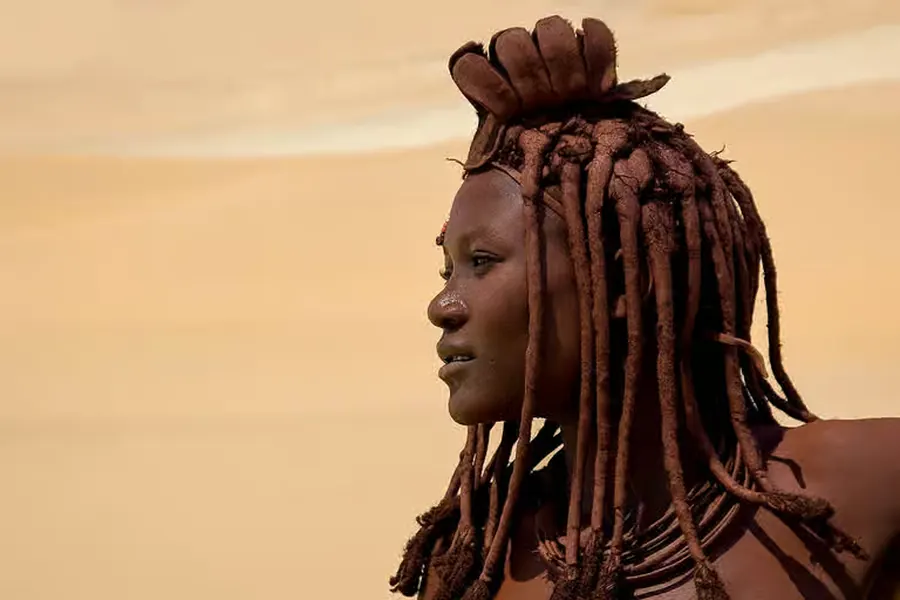
The remote northwestern corner: dramatic red mountains, ancient riverbeds, and the semi-nomadic Himba, one of the last traditional communities in southern Africa. The distances are enormous, the roads brutal in places, and it requires a real spirit of adventure. For the right family, a fly-in to the Kaokoland with desert lion tracking and time among Himba communities is among the most extraordinary travel experiences in Africa.
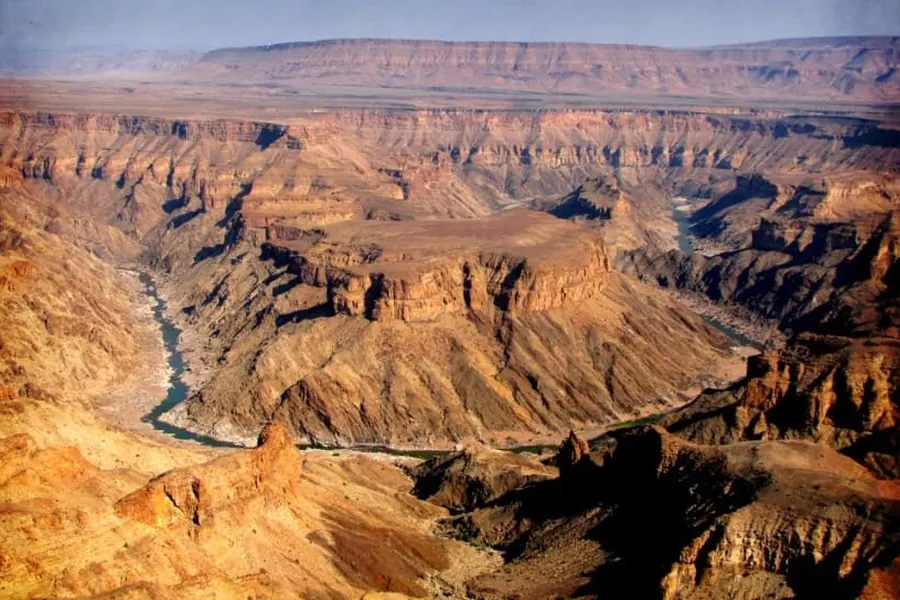
Often left off family itineraries, which is a mistake. The views from the rim are staggering. It works brilliantly as an add-on for families flying in or out of Cape Town, combining Namibia's south with a night or two on the South African side of the Orange River. The multi-day hike is for teenagers and fit adults only, but the viewpoints are accessible to all ages.
Namibia by season.
Namibia's seasons are straightforward, and the answer for most families is almost always the dry season. Here's why, and what the alternatives look like.
Dry season across all regions. Etosha waterholes are packed with wildlife as permanent water shrinks. Sossusvlei dune colours are at their most vivid in the cooler, clearer light. Damaraland is fully accessible. This is Namibia at its peak.
Late summer transitioning to dry. Some rain still possible in the north, but Sossusvlei and the south are excellent, and meaningfully cheaper than peak. Etosha is still good; Damaraland can be lush and dramatically green after the rains.
Namibia's rainy season, though 'rainy' is relative in one of the driest countries on earth. Etosha can be quieter for game; Sossusvlei and the south remain superb. Dramatic skies, lush colour, and the lowest rates of the year.
Namibia Inspiration
Itineraries I have developed for others to give you some inspiration. Each journey is built from scratch tailored around each family.
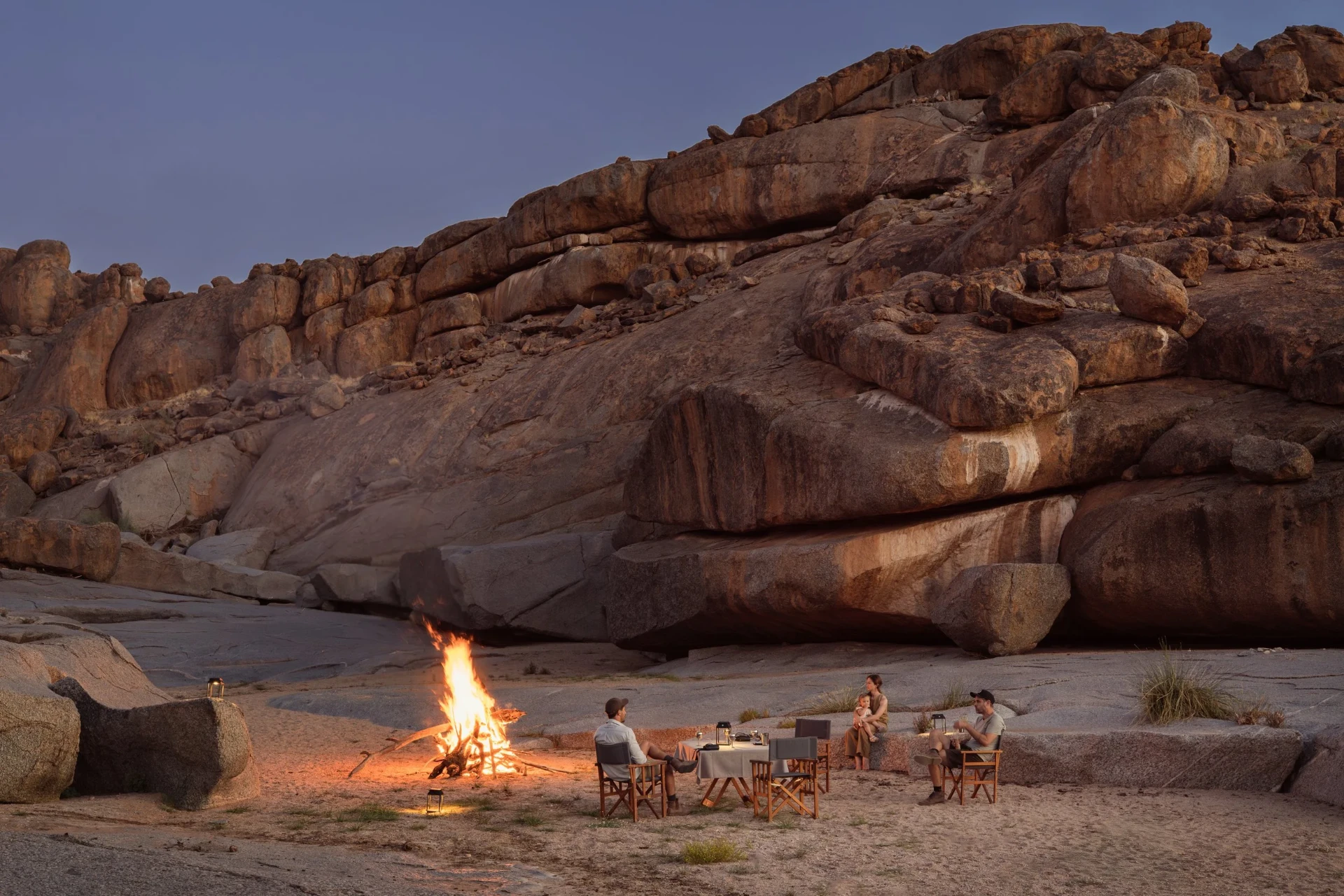
A wild family adventure in Namibia
Camping and lodge stays
A luxury family road trip in Namibia
A two week self-drive highlights of Namibia
Namibia Highlights Flying Adventure
6 nights Luxury Namibia
What I tell families planning a trip to Namibia.
The minimum age question
I recommend 6 as the minimum, and older is better. The long drives, the midday heat, and the more abstract nature of the desert mean younger children can find it less engaging than an East African safari. For 10+, Namibia is extraordinary.
Self-drive is the best way, but plan the distances
Namibia is vast. I pace self-drive itineraries carefully: no more than 4 hours' driving per day, with a clear activity waiting at the destination. Every family gets a detailed daily driving guide, fuel stops and emergency contacts. It sounds daunting. It isn't.
The dune climb is worth the 4am alarm
Climbing Dune 45 means leaving the lodge before dawn. It's cold, dark, and children will complain in the car. The moment they reach the top and watch the sun paint the desert in fire, the complaints stop. Pack warm layers. Back for breakfast by 9am.
Namibia is remarkably safe, and empty
Just 2.5 million people in a country the size of France and Spain combined. You'll regularly drive for an hour without seeing another vehicle. Almost no crime in the regions families visit, and a lack of crowds that feels like a private wilderness.
Build in two nights at Swakopmund
Don't rush through. Two nights gives children sandboarding, seal-colony kayaking, and time to explore, and gives parents a proper restaurant meal and a hotel shower. A mid-trip reset that makes the second half of the journey better.
Combine with South Africa or Zimbabwe
Namibia stands alone, but combines beautifully. Cape Town afterwards gives an extraordinary contrast between desert wilderness and one of the world's great coastal cities. Victoria Falls is a spectacular add-on. Tell me what excites you and I'll build it.
Ready to start planning your family adventure to Namibia?
Tell me about your family: their ages, your travel dates, and whether the self-drive idea excites or terrifies you. I'll come back with a clear itinerary, realistic driving distances and a sense of budget. No obligation. No pressure.