
Journey South
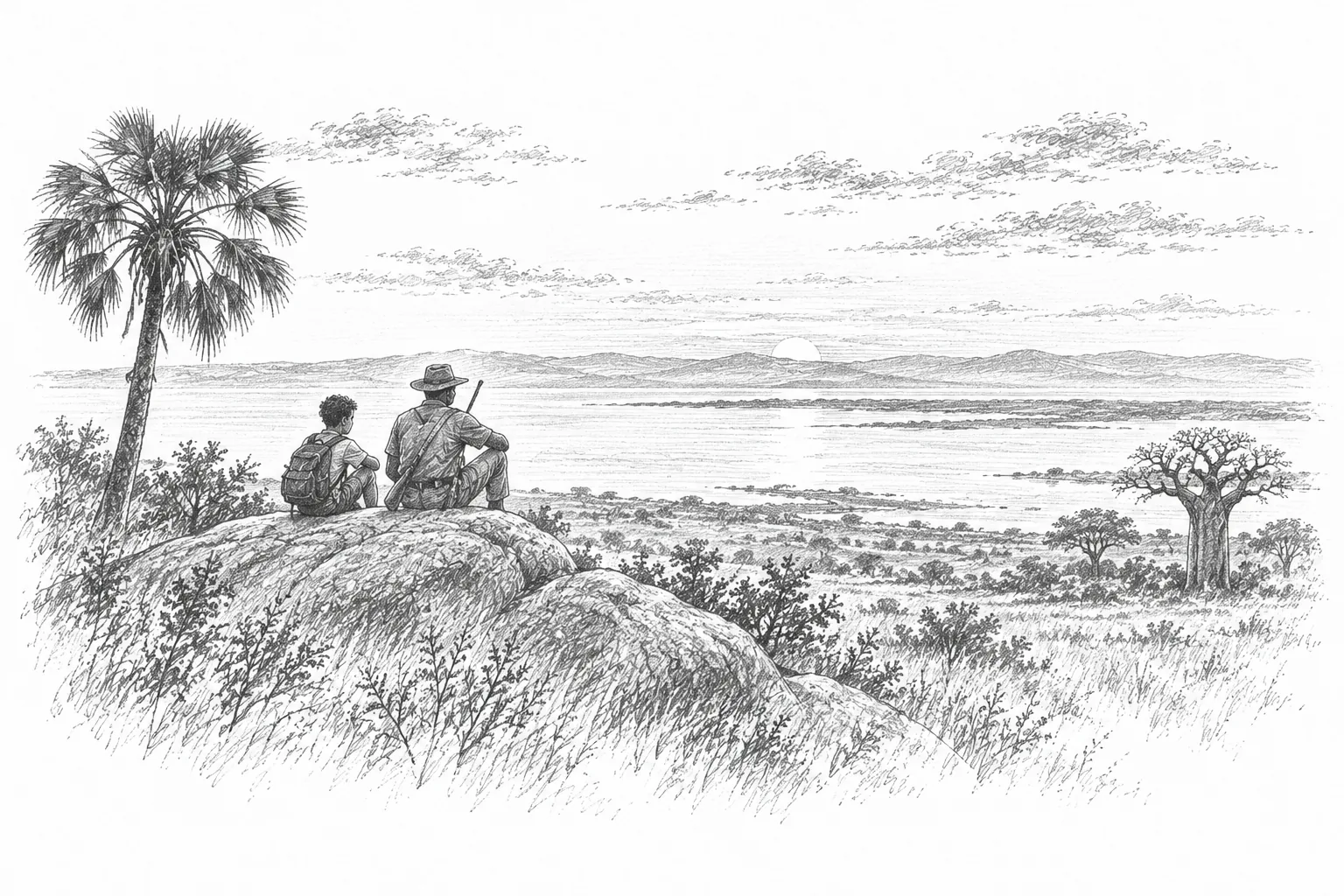
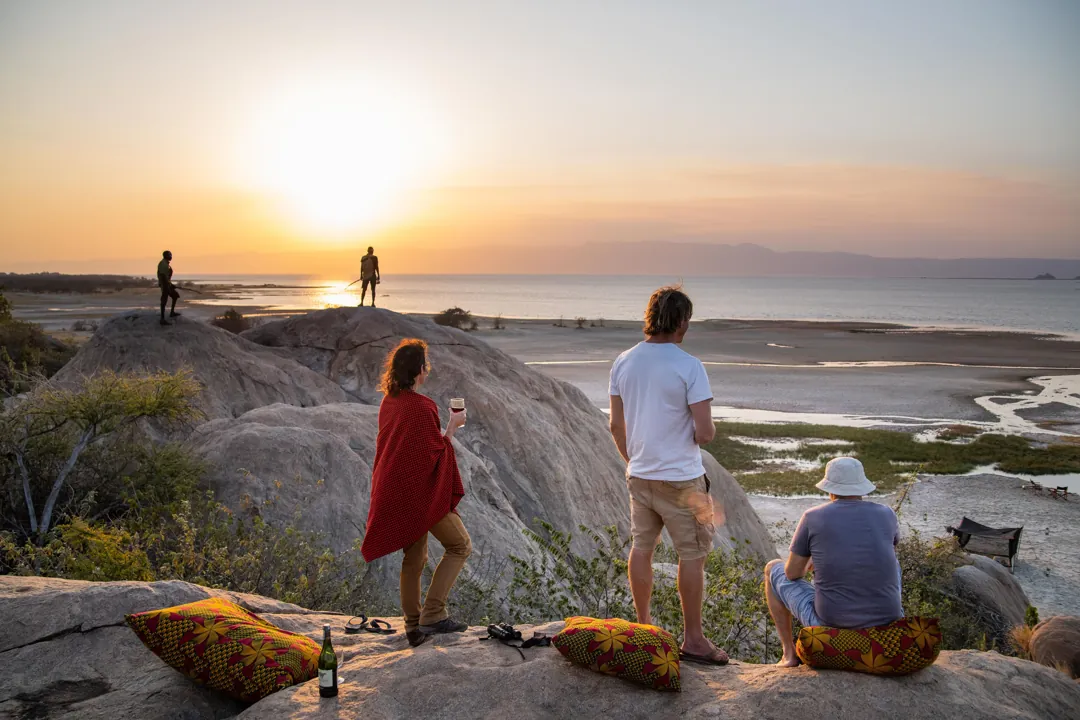
Guests and Hadza guides standing on granite boulders above Lake Eyasi as the sun sets over the water
Your travel itinerary, Tanzania

An immersive adventure in northern Tanzania

9 days
8 nights
From $20K / Β£15K
Guide price per family of four
Ages 8+
Best with older children and teenagers
Forest, bush and lake
Arusha, Randilen and Lake Eyasi

Northern Tanzania, a little off the usual route


This journey is for families who would rather walk, explore and meet people than spend every day in a vehicle. It suits older children and teenagers who are curious and happy to be active, and it shows a side of northern Tanzania that most safaris drive straight past.

It begins gently with two nights at Koroi Forest Camp in Arusha National Park, beneath Mount Meru, with forest walks, crater hikes and night drives. Then three nights in Randilen, a quiet wilderness area bordering Tarangire, where game drives sit alongside walking safaris, time with Maasai communities and a night sleeping out at a fly camp.

The last three nights are at Lake Eyasi, where the focus moves from wildlife to people and place. Two are at Kisima Ngeda and one is out at the Ombako fly camp with Hadza guides, one of Tanzania's last hunter-gatherer communities. The trip starts and ends in Arusha, and a few days on Zanzibar or Pemba would work well afterwards.

Polly x

Mount Meru to Lake Eyasi


  1. Arrive
    Kilimanjaro Airport

    About an hour's drive from Arusha

  2. 2 nights
    Koroi Forest Camp

    Eight chalets in the forest beneath Mount Meru

  3. 3 nights
    Olkeri Camp

    Eight tents in Randilen, with one night at the fly camp

  4. 3 nights
    Kisima Ngeda

    Lake Eyasi, with one night at the Ombako fly camp

  5. Depart
    Arusha

    For flights home from Kilimanjaro, or on to the coast

Eight nights of forest, bush and lake

01

Koroi Forest Camp

Arusha National Park, Tanzania, 2 nights

A gentle start beneath Mount Meru.

Koroi sits in thick forest at the base of Mount Meru and takes its name from the Maasai word for the black-and-white colobus monkeys that live around camp. There are eight tented chalets and a Tree House Suite, each with wooden floors, a fireplace and its own bathroom, with a dining room, lounge and campfire at the centre.

Arusha National Park is small but varied. From here the days can include forest walks to waterfalls and hidden glades, a hike on the rim of the Ngurdoto Crater, canoeing on the Momella Lakes, birding and night drives. Giraffe, buffalo and colobus monkeys are all common.

Starting on foot

Beginning in the forest rather than on the plains means children get used to walking with a guide, reading tracks and listening for animals before they meet the bigger game further on. It also gives everyone a couple of quieter days after the flight.

Where you sleep. Eight tented chalets and one Tree House Suite, each with a fireplace and an en-suite bathroom. Interconnecting rooms and triples can be arranged.

Comforts and connectivity. A dining room, lounge, bar, veranda and campfire. Wi-Fi in the main area. Families with children under five need a private vehicle.

From Polly's notebook

I would keep one morning here for the waterfall walk. It is a lovely, unhurried way to begin.

What you'll be doing

  • Forest walks to waterfalls and glades
  • Crater hikes and birding
  • Canoeing on the Momella Lakes
  • Day and night game drives
Film by Entara
02

Olkeri Camp

Randilen, Tanzania, 3 nights

Elephants, baobabs and a night under the stars.

Olkeri is the Maasai name for the leopard. The camp sits in Randilen, a community wilderness area bordering Tarangire, among rocky ravines and old baobabs, with large elephant herds. There are eight tented suites, and the dining deck looks over a waterhole and mud bath where elephants and lions come to drink.

Shared game drives and guided walks are included. Night drives, time with Maasai communities, bush brunches and sundowners can all be added, and Randilen is quiet enough that you will rarely see another vehicle.

The Olkeri fly camp

One of the three nights is spent at the fly camp. After lunch you walk out from camp with your guide and a small overnight bag, then sleep in mosquito-net tents with proper mattresses and duvets, eat around the fire and listen to the bush at night. It needs at least two guests and 48 hours' notice.

Where you sleep. Eight tented suites with king-size beds, teak floors, verandas and en-suite showers. Two tents are linked by a short boardwalk and suit families of up to five.

Comforts and connectivity. A mess tent, lounge, library and fire pit, solar lighting and charging in every tent, and Wi-Fi in the main area. Open all year.

From Polly's notebook

I would put the fly camp night in the middle of the stay, so you have a night in camp either side of it.

What you'll be doing

  • Guided walks and game drives
  • A night at the fly camp
  • Time with Maasai communities
  • Night drives and bush dinners
Film by Entara
03

Kisima Ngeda

Lake Eyasi, Tanzania, 3 nights

Doum palms, a soda lake and Hadza guides.

Kisima Ngeda sits in a stand of doum palms and fever trees on a 100-hectare farm overlooking Lake Eyasi, with a natural spring bubbling out of the rocks beside the main area and a granite hill behind. There are eight palm-thatched tented chalets, a pool, and a lounge and dining room looking out over the lake. Much of the food is grown or made locally, including the bread and ice cream.

The hills around the lake are home to the Hadza, who still live by hunting and gathering, and to the Datoga, who keep cattle. Guided days with Hadza hosts might include tracking, learning to use a bow, gathering wild honey or baobab fruit, a gorge walk and birding along the shore.

A night at Ombako

One night is spent at the Ombako fly camp in the hills on the eastern shore, with Hadza hosts. They show you how the desert rose is used for arrow poison, lead you to old rock paintings and springs, and climb the rocks for the sunset before dinner by the fire. The tents are just mosquito nets, so you sleep beneath the stars.

Where you sleep. Eight palm-thatched tented chalets on wooden decks, each with a king-size bed, a veranda and an en-suite walk-in shower heated by a traditional wood-fired boiler.

Comforts and connectivity. A pool, a bar and lounge, a dining room above the lake and the spring beside camp. Exclusive sundowners and bush meals can be arranged.

From Polly's notebook

I would do the Ombako night first and finish with two slower days at Kisima Ngeda before the drive back to Arusha.

What you'll be doing

  • A day with Hadza guides
  • A night at the Ombako fly camp
  • Visiting a Datoga family
  • Gorge walks, birding and the pool
Film by Entara

Children remember the walking, the fires and the people far longer than any game drive. This trip gives them plenty of all three.
Polly Townsend-Rose

Busy mornings, slow afternoons


  1. 01Early morning

    On foot

    A forest trail, a bush walk or a morning out with Hadza guides.

  2. 02Midday

    Back to camp

    Lunch, a swim or a rest in the heat of the day.

  3. 03Afternoon

    Out again

    A game drive, a walk to the fly camp or a visit to a Maasai or Datoga family.

  4. 04Evening

    Fire and stars

    Sundowners on the rocks and supper around the fire.

What I arrange for you

  • Chalets and tents at Koroi, Olkeri and Kisima Ngeda, and two fly camp nights
  • Meals and guided activities at each camp
  • A private vehicle and guide for road transfers between stays
  • Arrival and departure transfers in Arusha
  • Park, conservation and community fees, set out in your proposal
  • Personal support from planning until you return home

Your proposal sets out exactly which meals, activities, flights and fees are included. International flights and optional extras are quoted separately.

The things families ask me first

Best months

June to October is dry and good for walking. December to February also works well. I would avoid April and May, when the long rains make some tracks hard going.

Getting there

Most families fly into Kilimanjaro International Airport, about an hour from Arusha. The stays are linked by road with a private guide, and I can add a short flight to Zanzibar or Pemba at the end.

Children

The trip suits children from about 8, but walking safaris and fly camps have their own age rules, often stricter than the camps themselves. I check each one against your children's ages and your dates.

Health and packing

Northern Tanzania is a malaria area, so it is worth speaking to your travel clinic. Bring good walking shoes, layers for cool forest mornings and a small soft bag for the fly camp nights.

Shall we shape this around your family?

I'd love to hear who's travelling and what you have in mind. We can use this itinerary as a starting point and adjust the pace, the camps and the time away to suit you.

PLAN YOUR TRIP