
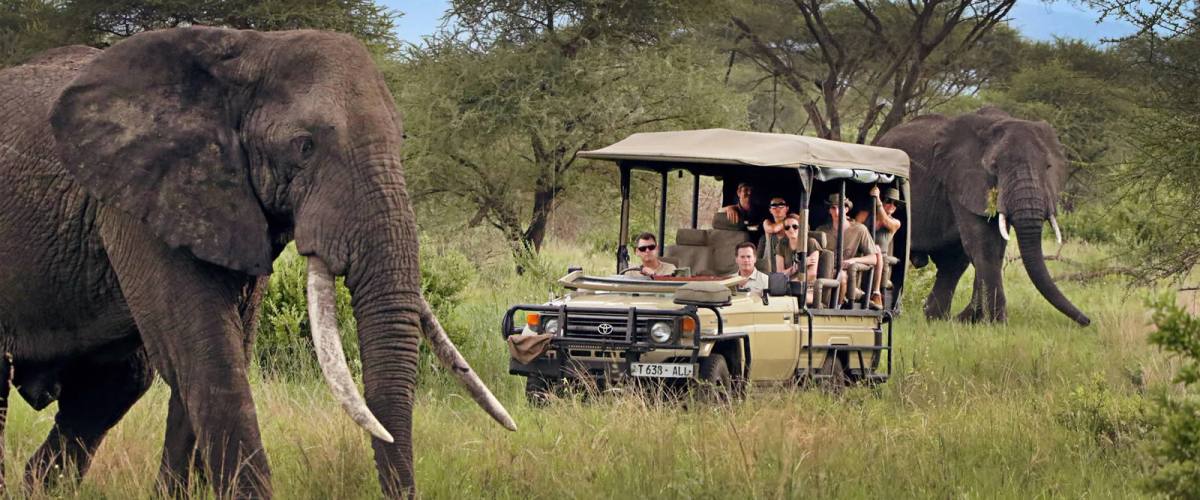
How to plan a family safari in Africa: A step-by-step guide from 16 years on the ground
Every year I speak to dozens of families who've spent weeks down a research rabbit hole; open tabs, conflicting blog posts, lodge websites that all say the same thing, and still feel no closer to knowing what they're actually booking. I understand why. Africa is enormous. The choices are huge. And the stakes feel high when you're spending a significant amount of money on a trip you want your children to remember for the rest of their lives.
So here is what I actually tell families when they first get in touch with me.
Step 1: Start with your children's ages, not a destination
This is the single most important decision in a family safari, and almost everyone starts in the wrong place! Before you look at a single lodge, you need to know what your children's ages actually unlock and restrict.
Under 5: Very few private lodges accept children under five on open-vehicle game drives, and for good reason. Long drives in the heat, unpredictable animals at close range, and the need for total silence during sightings make it genuinely difficult. It's not impossible — there are lodges that accommodate very young children with private vehicles and shorter drives — but your shortlist shrinks significantly, and you need a specialist who knows which lodges mean it when they say "family-friendly."
Ages 5–9: This is where a family safari starts to come into its own. Children this age are captivated by animals, retain an extraordinary amount of what guides tell them, and haven't yet developed the teenage instinct to appear unimpressed. I recommend malaria-free reserves for this age group almost without exception — not because the risk in malaria areas is catastrophic, but because antimalarial medication options for under-tens are limited and carry side effects that can blunt the entire trip.
Ages 10–14: The sweet spot. Old enough for the full suite of activities — bush walks, night drives, sometimes hot-air ballooning. Curious enough to engage meaningfully with guides. Not yet so reliant on a phone that the absence of Wi-Fi becomes a drama. This age group tends to have the most transformative safaris.
Ages 15+: Teenagers on safari surprise their parents every time. The immersion cuts through in a way that a screen never does. At this age, you can consider more remote or adventurous destinations — Kenya, Botswana, Zambia walking safaris — that would be logistically difficult with younger children.
The key question to ask every lodge: What is your minimum age policy, and does it apply to game drives specifically? Many lodges with a stated minimum of "6 years" will tell you privately that they prefer 8, or that the policy applies to walking safaris but not drives. Get the real answer before you build your itinerary around a property.
Step 2: Decide whether malaria risk is a factor
I've already mentioned this under ages, but it deserves its own step because I see families either over-worry about it or not think about it at all.
The real picture:
South Africa has genuinely malaria-free game reserves — Madikwe, Pilanesberg, the Waterberg, and the Eastern Cape reserves carry no ongoing transmission risk. You can take a four-year-old to Madikwe without antimalarial medication and without losing sleep.
Kruger National Park and KwaZulu-Natal in South Africa carry low-to-moderate risk. Kenya, Tanzania, Botswana, Zambia, and Zimbabwe all carry some level of risk, and prophylaxis is standard advice for all ages.
None of this makes those destinations off-limits. I've taken families to the Masai Mara with children as young as seven, and they had extraordinary trips. But the medication conversation with your GP adds a layer of complexity and for families on a first Africa trip, I almost always recommend starting in a malaria-free South African reserve and saving the higher-risk destinations for a second trip when you know what you're doing.
My rule of thumb: If any child in the group is under eight, start malaria-free. If everyone is over ten and this isn't your first Africa trip, the conversation is more nuanced.
Step 3: Choose your destination based on what you actually want
Once you know your ages and your malaria position, you can start thinking about destinations with some logic behind the choice.
South Africa is where I send most first-time family safari groups. The infrastructure is excellent, the lodge quality is exceptional, the Big Five sightings are as good as anywhere on the continent, and the ability to combine five nights on safari with five nights in Cape Town creates a trip that works for every age and attention span in the group. Malaria-free options give you real flexibility with younger children.
Kenya is the right answer when your children are older, you've already done South Africa, and you want the iconic open-savannah landscape or the Great Wildebeest Migration (July–October). Kenya demands a bit more logistically — you'll typically fly between camps rather than drive — but the experience is singular. Nothing I've seen in 16 years matches watching the Mara River crossing.
Tanzania (the Serengeti and Ngorongoro) is extraordinary for older families and pairs naturally with Kenya. The Ngorongoro Crater is one of the only places in Africa where you can reliably see all of the Big Five in a single morning.
Botswana is for families who want a wilder, more remote experience with older children. The Okavango Delta is one of the most extraordinary ecosystems on Earth, but the cost is higher, the distances are greater, and it's not the place to find out your eight-year-old doesn't take to game drives.
Zimbabwe and Zambia are for adventurous families who want to walk — Victoria Falls, Mana Pools, the Lower Zambezi. These are great experiences, but they work best when your children are twelve or older and genuinely interested in the bush rather than just tolerating it.
Step 4: Get your timing right
Families are largely constrained by school holidays, and the good news is that Africa cooperates: the northern hemisphere summer break (late July–August) falls almost exactly within Africa's dry winter peak season, which is the best time for game viewing across southern and East Africa.
The dry season (May–October) is when vegetation thins, animals concentrate around water sources, and sightings become more predictable. For families with younger children in particular, the ability to spot a lion from 300 metres rather than having to search dense green bush makes an enormous difference to how the safari lands.
July–August is peak season, which means peak prices and peak lodge occupancy. Book twelve months ahead for the best lodges during this window. I'm not being dramatic, the places families most want to stay genuinely sell out.
May, June, September, and October are shoulder months that offer near-identical game viewing conditions to peak, often at meaningfully lower rates and with fewer other vehicles on game drives. If you have any flexibility on school holiday timing (sixth form students, home educators, or families who'll negotiate with the school), these months are the sweet spot.
Christmas and New Year are the start of the green season in southern Africa — lush, dramatic landscapes, newborn animals, exceptional birdwatching, and some lodges' lowest rates of the year. The trade-off is denser bush that makes sightings harder. It works beautifully for families who are going for the overall experience rather than chasing a specific animal list.
Step 5: Work out how long you actually need
The most common mistake I see families make on trip length is going too short. Three nights on safari sounds fine on paper; it usually isn't. You spend day one adjusting to the pace and the jetlag, day two starting to find your rhythm, and day three wishing you had more time.
My minimum recommendation for a meaningful family safari is four nights in one location. This gives you enough game drives to absorb the experience, the chance to see different things at different times of day, and the psychological space to stop trying to tick boxes and start actually noticing things.
For a two-week family trip to South Africa, my typical structure looks like this:
- 2 nights Johannesburg arrival (easy transit, possible city or winelands visit)
- 5–6 nights private game reserve (one or two locations — don't move between camps with young children if you can avoid it)
- 5–6 nights Cape Town and surrounds
- 1 night Johannesburg departure buffer
This gives enough time in each place for the experience to settle, keeps travel days to a minimum, and means children aren't doing long game drives every day without a break.
Adding a beach finale (Mozambique, Zanzibar, Seychelles) works best as a third leg for families who have the time and budget. It lands beautifully after safari — the decompression from the bush to the coast is something families who've done it describe as one of the best travel pacing decisions they ever made!
Step 6: Understand the lodge decision
Not all lodges that call themselves "family-friendly" actually are. I've stayed in enough of them to know the difference.
What family-friendly looks like:
- A minimum age that reflects their actual product, not a marketing claim
- Private vehicles available for families rather than a shared game drive with strangers, which is harder to manage with children.
- Junior ranger programmes or dedicated children's activities at the lodge — not just "we'll keep them busy"
- Family suites or inter-leading rooms (not two separate bungalows 50 metres apart in the bush)
- A pool — more important than it sounds during midday downtime in hot months
- Guides who are genuinely experienced with children, not just tolerant of them
The private vehicle question is important. On a shared game drive, a crying three-year-old or a teenager who wants to leave early affects everyone else in the vehicle. A private vehicle for your family means the guide can adapt the drive to your children's pace, stop longer when they're engaged, and cut short when they're not. It usually costs more, but for families with younger children it's often the difference between a difficult experience and a transformative one.
Step 7: Book early, earlier than you think
Top family lodges during school holiday periods sell out. I say this to every family I speak to, and about half of them don't quite believe me until they come back the following year saying the lodge they wanted was fully booked.
For peak season (July–August), book 10–12 months ahead. The best family-specific rooms and suites go first — the ones with the extra beds, the inter-leading layouts and the family vehicles.
For shoulder months, you have more room, but eight months ahead is still sensible for the top-tier properties.
Cape Town in particular needs early planning during December–January (Southern Hemisphere summer), which is increasingly popular with both Southern African domestic families and international visitors. The city feels like the whole world arrives at once during December.
Step 8: Don't underestimate the pre-trip preparation for children
This is the step that most planning guides skip and I think is really important.
Children who arrive at a safari having been prepared for it get dramatically more from the experience. Not "prepared" in a schoolwork way — in an anticipation-building way.
In the months before departure, we suggest:
Animal identification: A simple notebook and pen in the vehicle means children arrive wanting to tick things off rather than asking when the next lion will appear. Most lodges provide a wildlife checklist; get it in advance and let children mark it up before they even board the plane.
Watch something together: There is a huge amount of genuinely excellent wildlife documentary content available — Africa-specific, visually extraordinary — that builds context for what children will see. When a child recognises a species they watched three weeks earlier doing something specific, something clicks that no amount of telling them to pay attention can manufacture.
Talk about the pace: Safari is not a theme park. There are long stretches where nothing obvious is happening. Children who understand that the guide is tracking a leopard by reading the alarm calls of impala — that the "nothing" is actually everything — engage completely differently. Explain this in advance. It changes the whole experience.
Brief them on sound discipline: Not to frighten them, but a child who understands why silence near wildlife matters is a child who can hold it together for the twenty seconds that turn a game drive into something they'll talk about for twenty years.
The questions to ask before you book anything
After 16 years I still ask these every time I'm assessing a new lodge for families:
- What is your genuine minimum age for game drives, and is that on open vehicles or applies to all vehicles?
- Do you offer private vehicles for families, and at what extra cost?
- What are your family room configurations, and what's the maximum occupancy?
- What children's programming do you offer beyond game drives?
- What is the malaria status of your reserve?
- What is the guide-to-vehicle ratio, and how experienced are your guides with children specifically?
- What is your cancellation policy, and does it change if a child is unwell?
The answers to these questions tell you more about whether a lodge is genuinely built for families than any photography on their website.
The bottom line
Planning a family safari in Africa is not complicated if you work through the decisions in the right order. Start with your children's ages. Then tackle the malaria question honestly. Then choose a destination. Then get your timing and length right. Then select lodges that actually deliver on their family positioning.
The families who get the most from Africa are the ones who arrive prepared, unhurried, and with the right expectations. The ones who get the least are the ones who tried to do too many destinations, moved too often, or chose lodges based on Instagram aesthetics rather than whether they'd work for an eight-year-old at 5:30am on a cold morning in the bush.
Frequently asked questions
What is the best age to take children on a safari in Africa? The ages of 5–14 generally work best for a family safari. Children under five face restrictions at most private lodges. The 8–12 window is often cited as the sweet spot — curious, engaged, and old enough to follow safety guidance on game drives. Teenagers consistently surprise their parents; the immersion cuts through in ways that few other travel experiences manage.
How long should a family safari in Africa be? A minimum of four nights in one location is my recommendation for a meaningful safari experience. Most well-structured family itineraries run 10–14 nights in total, combining five to six nights on safari with five to six nights in a city or coastal destination such as Cape Town, Zanzibar or Lamu.
Do I need malaria medication for a family safari in Africa? It depends on your destination. South Africa has genuinely malaria-free game reserves — Madikwe, Pilanesberg, the Waterberg, and the Eastern Cape — where no prophylaxis is required. Kenya, Tanzania, Botswana, Zambia, and Zimbabwe all carry some level of risk and antimalarial medication is standard advice. Families with children under eight should strongly consider starting with a malaria-free South African reserve.
When is the best time to go on a family safari in Africa? The dry season (May–October) is the best time for game viewing across both southern and East Africa. For UK families constrained by school holidays, the summer break (late July–August) aligns almost perfectly with peak safari season. Shoulder months (May–June and September–October) offer comparable game viewing at lower prices and less competition for lodge availability.
How much does a family safari in Africa cost? Costs vary significantly by destination, lodge type, and group size. A week at a mid-range private reserve in South Africa for a family of four, including flights from the UK, typically starts from around £12,000–£18,000 all in. Premium private reserves and East African destinations run higher. The best approach is to set a total budget first, then let a specialist build the best possible itinerary within it rather than pricing individual components separately.
How far in advance should I book a family safari? For peak season (July–August), 10–12 months ahead is realistic for top family-specific lodges and room configurations. The best family suites — those with inter-leading rooms, family vehicles, and dedicated children's programmes — sell out first.
More from the journal
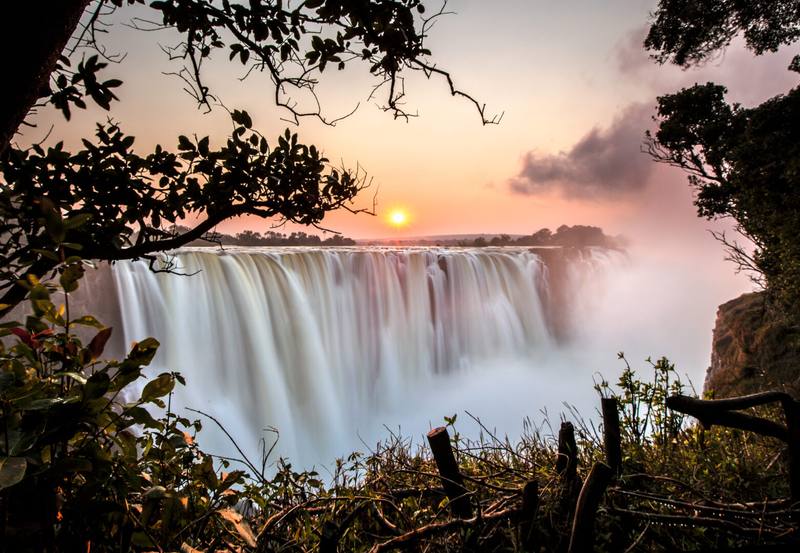
Victoria Falls With Kids: Zambia or Zimbabwe, and When to Go
Victoria Falls with children: which side to choose, Zambia or Zimbabwe, when to go for the best view, Devil's Pool age rules and what's worth doing. A specialist's family guide.

How far ahead should you book an African family safari? My planning calendar
A country-by-country planning calendar, plus what to do if you think you have left it too late.
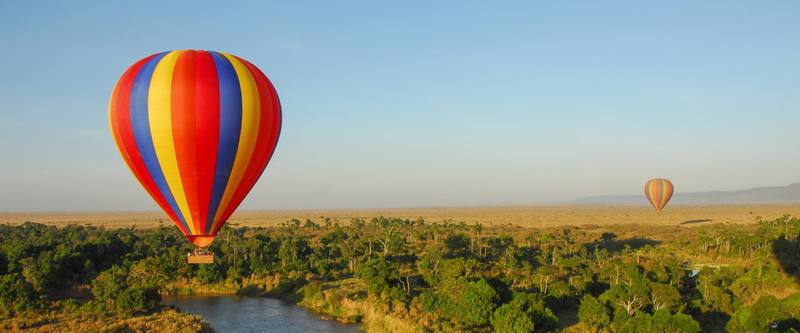
The best month to travel to… A Journey South guide to timing your African family adventure
Wondering when to go on safari? Our month-by-month guide covers the best time to visit 10 African countries
Ready to start planning your holiday?
A free, no-obligation consultation call with Polly — talk through ideas, dates and budget.