

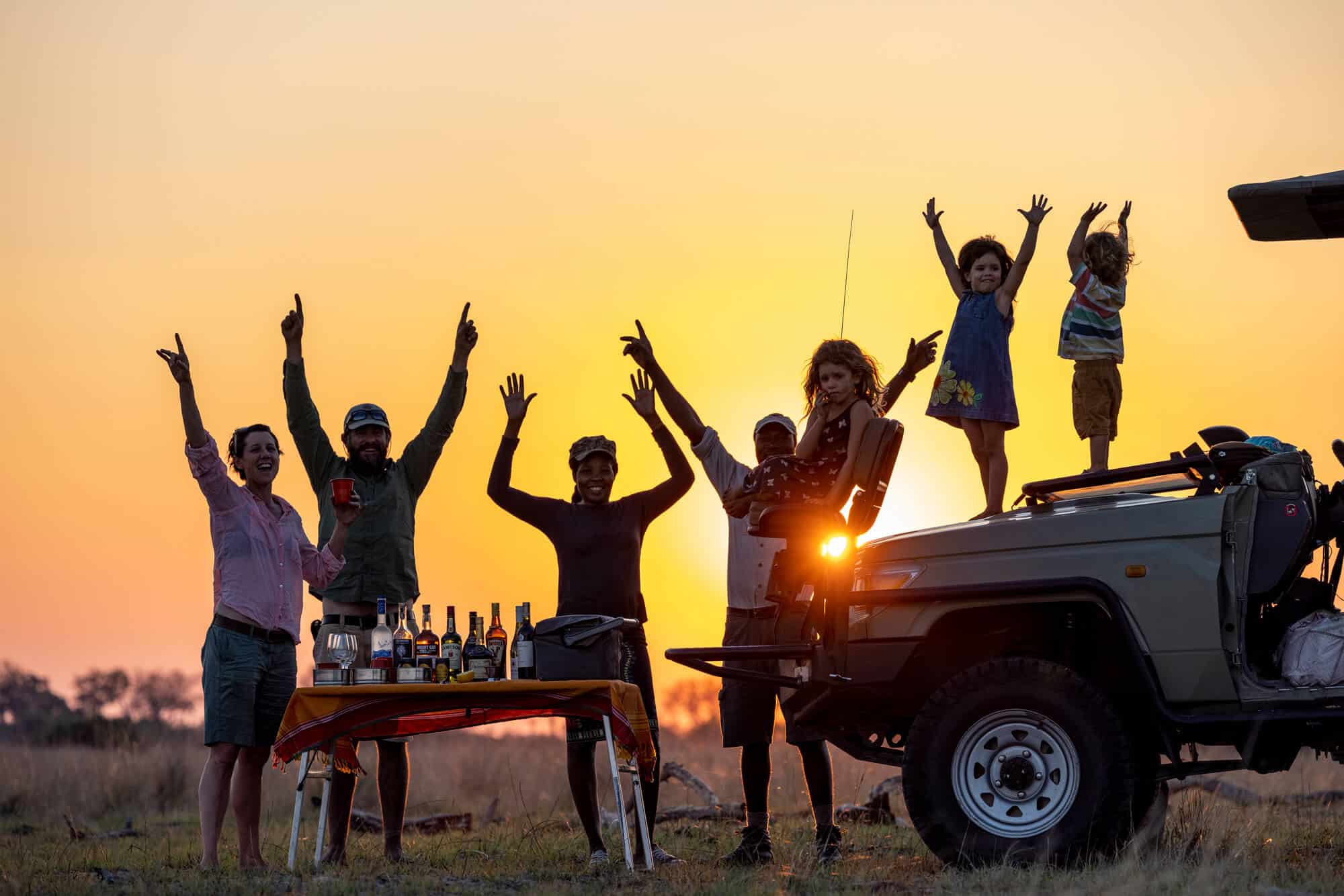
‘Family-friendly’ is a phrase that gets used a lot in safari lodge marketing. It might mean a family unit, a pool or a babysitter, but those things alone rarely make a safari come alive for families. Based on my own experience these are the points I always keep front of mind when planning safaris for guests.
- The single most important factor on a family safari isn’t the lodge, the room configuration or even the wildlife. It’s the guide.
Great family guides don’t just know the bush, they know how to read children. They can sense when curiosity is peaking, when energy is dipping, and when it’s time to switch gears. They explain without talking down, answer endless questions with patience, and turn small moments into meaningful ones. They know when to linger with a dung beetle instead of chasing the next big sighting, and when to call it a day early because the youngest member of the family has had enough. That awareness makes all the difference.
2. Children don’t need entertaining – they need inclusion
One of the biggest misconceptions about family safaris is that children need constant entertainment. In reality, children thrive when they’re included in real life at camp. That might be learning to track animals on foot with a guide, helping in the kitchen or baking bread with the staff, visiting a conservation project and understanding how wildlife is protected, sitting around a fire listening to stories or learning the names of birds or stars. These moments aren’t staged or scheduled. They’re organic, immersive and deeply memorable.
-
Flexibility matters
Safaris are often built around early starts, long game drives and ticking off sightings. That rhythm works brilliantly for adults, but with families it needs breathing space. The best family safaris allow days to unfold more naturally. Maybe it’s a shorter morning drive with a long breakfast back at camp, a swim or downtime in the heat of the day, or choosing a sundowner close to camp rather than pushing for one last sighting. Flexibility means younger members of the family don’t feel like they’re constantly being pushed, and parents aren’t stressed about keeping up. Ironically, this often leads to better wildlife moments too because everyone is more present and engaged when it counts.
-
Variety is first prize
One of the smartest ways to make a family trip to Africa really work is to build in variety. Three to four nights in a classic Big 5 reserve is often the sweet spot for children. It’s incredibly exciting and a real treat, but after this many families are ready to shift gears. Changing the landscape and the pace can really elevate the trip. In Kenya for example, combining the Masai Mara with Laikipia, for example, adds walking safaris, camel treks, fly-camping and community experiences to traditional game drives. In Botswana, pairing the Okavango Delta with the Makgadikgadi Salt Pans adds quad biking, sleepouts, and cultural experiences . In Zimbabwe, combining Hwange National Park with Lake Kariba brings boating, fishing and a completely different rhythm after time in the bush. This kind of contrast keeps children curious and energised, gives the whole family a more rounded experience, and turns a safari into a journey rather than a single adventure.
Polly Townsend-Rose


