
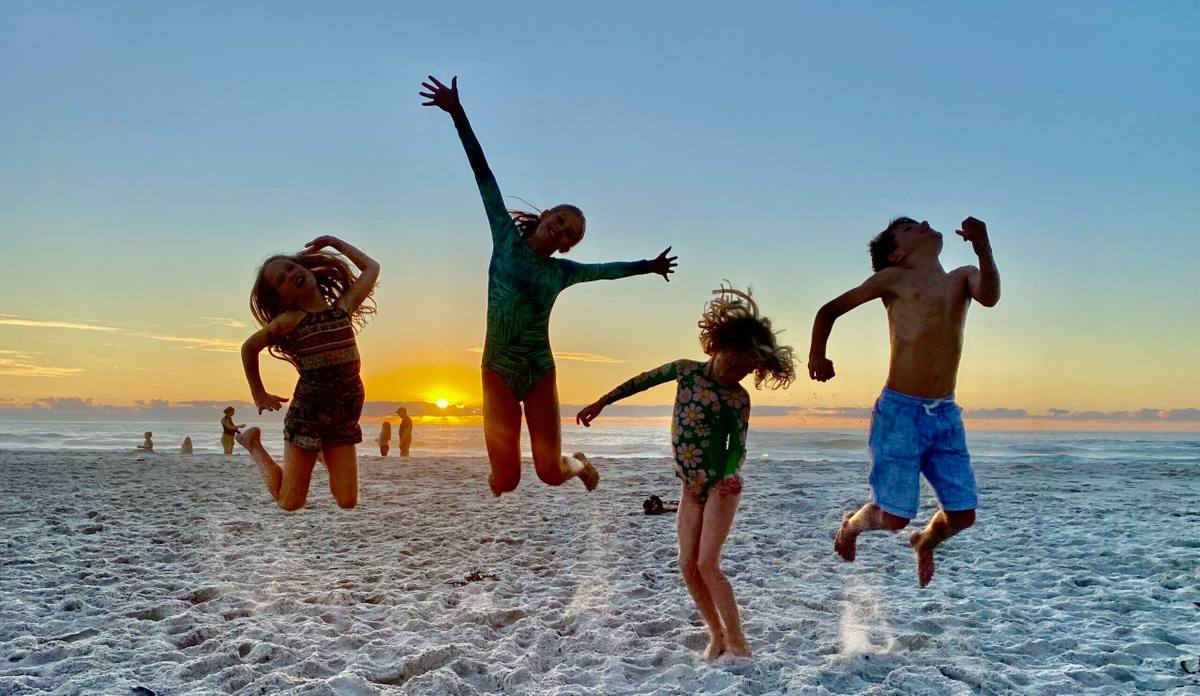
The transformative power of travel: shaping young minds at every age through family adventures
A mother asked me last year, half apologetically, whether taking her children out of school for two weeks in the Okavango could really be justified. "They'll fall behind," she said. "Is it worth it?"
I've been asked versions of that question before and my answer has never changed. What children take from time in wild places isn't a substitute for school. It's a different kind of education entirely — one that arrives through the soles of their feet and the back of their neck, and stays put for decades.
I know because I've watched it happen to my own two, raised here in Cape Town. And I know because of a year my husband James and I spent driving the length of Africa, London to Cape Town, in a Land Rover called PAX — thirty-eight weeks that taught me more about how people change in wild places than any amount of reading ever could. If you want the whole story of that drive, it's here in the journal.
Here's what actually happens to children out there.
They form a real relationship with the natural world
Not an abstract one. Not a poster-on-the-wall one.
There's a moment I come back to often. James and I spent two nights in the Okavango Delta being poled through the reed channels in a mokoro (a dugout canoe) by our guide, Jeeby. We camped on an island shared with elephant, hippo, and on the first evening, a snake that passed a few feet from the tent. I have stayed in beautiful lodges in the Delta since. Nothing has ever matched the feeling of being that small, and that awake, in a place that wild.
Children who have that feeling once don't forget it. It reorganises something. The environment stops being a topic and becomes a place they've been, with a smell and a sound and a guide's name attached. That's where stewardship actually comes from — not from being told to care, but from having something worth caring about.
If that's what you're after, Botswana does it better than almost anywhere.
They build skills that don't show up on a report card
Being out of their usual environment asks things of children that home never does.
Reading tracks in the sand. Working out why the guide has stopped talking. Setting up camp when they're tired and it's getting dark. Navigating a hike when the path isn't obvious. None of it is graded, and all of it compounds into something that looks a lot like confidence.
I see it most clearly with teenagers, who arrive convinced they'd rather be anywhere else. In Namibia, climbing Dune 45 means a 4am alarm, cold dark, and a car full of complaints. Then they reach the top and watch the sun set the desert on fire, and the complaints stop mid-sentence. Something in them recalibrates about what effort is worth.
If you're weighing up what your children are ready for, this piece on the right age for a first safari is the honest version, and this one on what makes a safari work for families covers the practical side.
Their bodies and minds settle
The health case for outdoor time is well documented — more movement, better sleep, lower stress, steadier mood.
What I'll say from experience is that the change is visible within about seventy-two hours. Children who arrive wound tight, sleeping badly, reaching for a screen every eleven minutes, turn into different people by day three. They eat properly. They sleep like stones. They stop asking what's next, because what's happening is enough.
The mechanism isn't complicated: sunlight, movement, and an absence of the things that fragment attention.
The wild is a living classroom
Children are curious by default. The wild simply gives that curiosity somewhere extraordinary to go.
Watch a ten-year-old work out why the wildebeest are moving one direction and not another, or why a particular tree grows only on termite mounds, and you're watching biology, geology and ecology land in a way no textbook manages. The questions come faster than you can answer them, which is the point.
Some of my own best learning happened this way. In Namibia's Brandberg, we borrowed the telescopes of a visiting German physics professor and his students, and spent an hour learning to actually read the southern sky. I understood the place differently afterwards. Knowing why somewhere looks the way it does changes how it makes you feel — and children get there faster than adults do.
For families who want that learning to have real teeth, the conservation programmes I write about here go a good deal deeper than a game drive.
They learn to be present
This is the one parents mention most afterwards.
On the Makgadikgadi salt pans we camped three nights under a new moon, with a sky so thick with stars it cast a shadow on the ground. There was nothing to do but look. No signal, no schedule, nothing arriving.
Children are extremely good at that state when you give them access to it. The sights and sounds of the wild pull attention outward and hold it there, and after a few days you get a version of your child you might not have seen in a while — slower, funnier, more available.
I've written more about why disconnection has become the thing families actually want in this piece on being offline, and about the things worth bringing that don't fit in a suitcase here.
Families come back closer
Something specific happens when a family faces small challenges together, away from home, with no roles to fall back into.
The early starts. The long drive. The moment the vehicle gets stuck and everyone has to push. The disappointment of a leopard that doesn't show, and the shared disbelief when one does. These are shared experiences in a way that a beach holiday, for all its pleasures, rarely produces.
Parents tell me the conversations change. Teenagers who communicate in monosyllables at home start narrating. Siblings who bicker become a team. It doesn't last forever but the memory of it does, and families reach for it for years afterwards.
They meet people who live differently
This is the part I'd argue matters most, and it's the part most itineraries skip.
The lesson of our entire drive through Africa from London To Cape Town wasn't the wildlife. It was the hospitality. A man in Port Elizabeth who fed us oysters and gave us a real bed for the first time in months. Another who pulled his car alongside ours at speed simply to offer us his beach house, because he'd done the same drive years before. Three days in Robertson where a vineyard owner named Gideon sat us down with twenty locals and taught us more about South African wine than any tasting could.
Knowledge handed over around a table, freely, by people glad you asked. That is the thing I most want families to understand about this continent.
For children, meeting people whose daily lives look nothing like their own and finding them welcoming, funny, and expert, does more for empathy than any lesson on the subject. A morning with the San in Botswana is the clearest example I know of. Rwanda, for families with older teenagers, offers something rarer still: a country that carries a hard history openly and still builds forward.
So — is it worth two weeks out of school?
You'll have probably gathered my view by now!
Children forget most of what happens to them. They do not forget the night the sky cast a shadow, or the guide who showed them how to read a track, or the morning they were the first person in the family to spot the lion. Those become part of how they understand themselves.
The trick is building the trip around the children you have — their ages, their attention spans, what will land and what won't. That's the whole job, and it's why no two itineraries I design look the same. If you want to see how I approach it, the step-by-step version is here.
And when you're ready to talk it through properly, tell me about your family and let's start to discuss what type of holiday would be special for you.
More from the journal
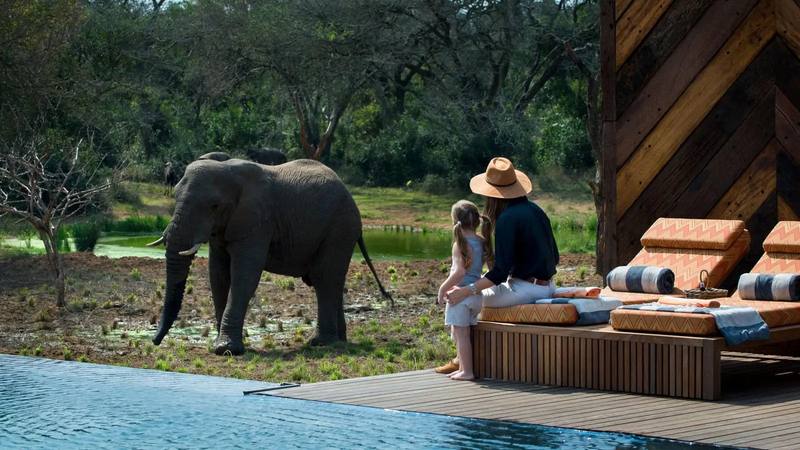
Bring everyone: how to plan a multi-generational family trip to Africa
How I plan trips for three generations: leaving space in the agenda, pacing for the oldest and youngest, and where in Africa works best for grandparents and children.
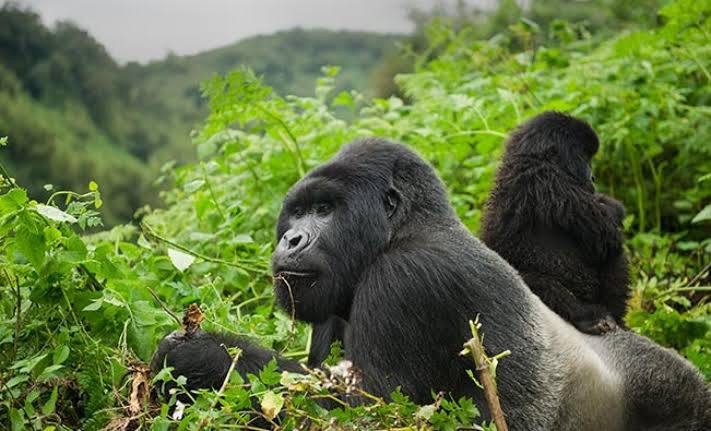
Gorilla trekking with children: the age rule, and how to plan around it
The minimum age for gorilla trekking is 15. Here is how I plan around it: Rwanda or Uganda, options for younger siblings, and when to book.
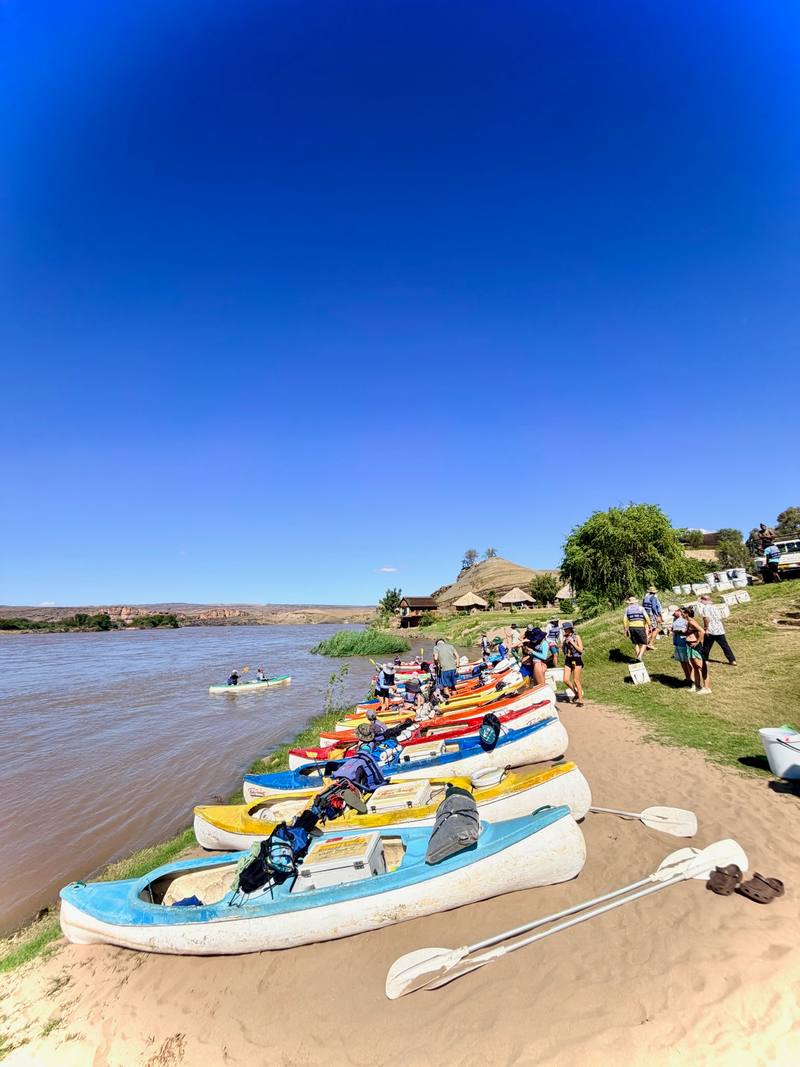
Rafting the Orange River with children: four days, eight families, no signal
A first-hand account of a four-day Orange River rafting trip with eight families: the drive from Cape Town, life on the river, and which families it suits.
Ready to start planning your holiday?
A free, no-obligation consultation call with Polly — talk through ideas, dates and budget.